
Can a live-in partner claim a share in the apartment after a long relationship ends?
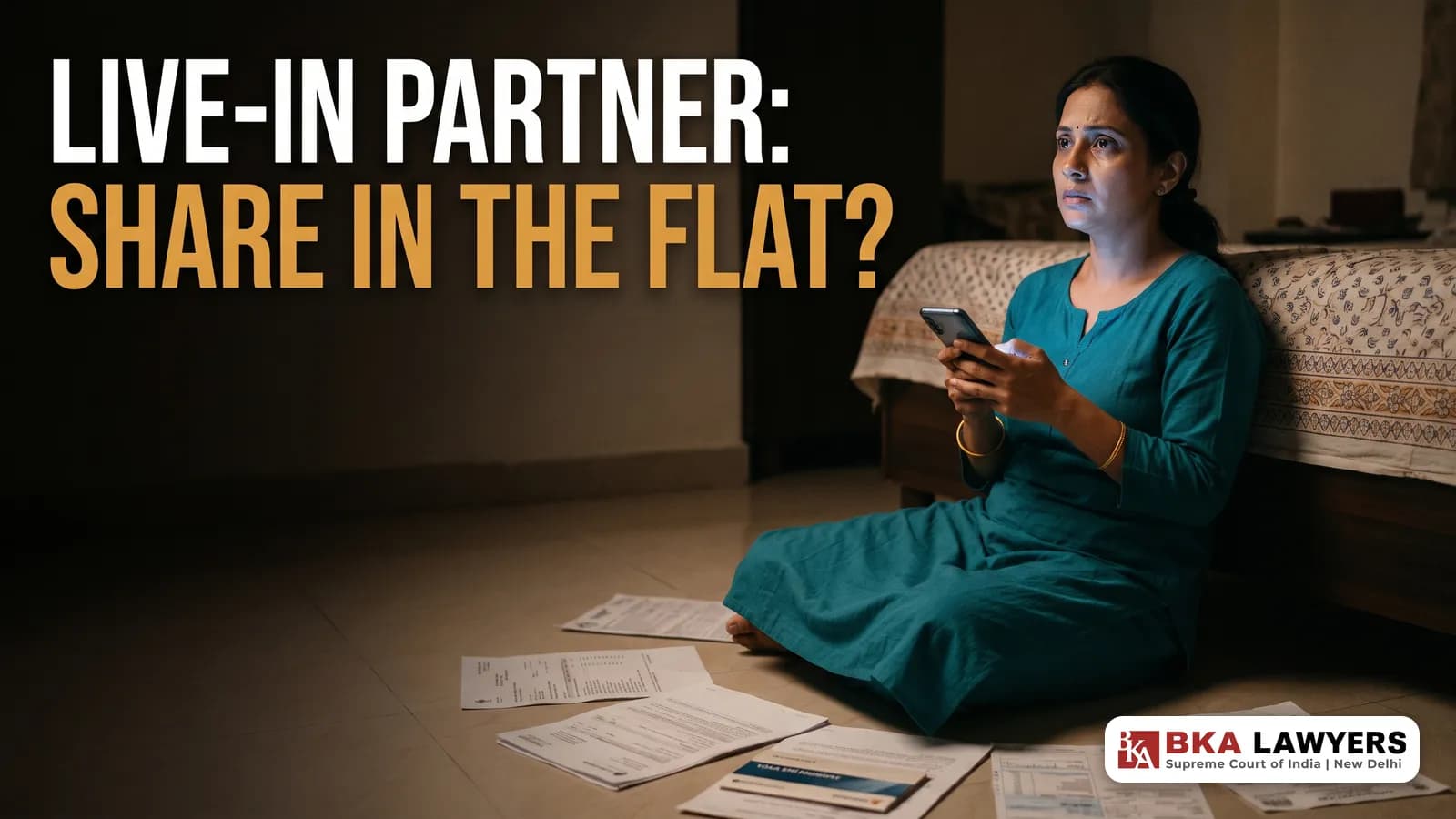
A live-in partner does not automatically get a share in her partner's apartment merely because the relationship lasted many years. There is no "common-law marriage" in Indian law, and a marriage certificate is not the only route to relief — but the route that exists is a claim for what she contributed or is entitled to, not an automatic half share.
Reports of a Supreme Court ruling in which a woman who had lived with a man for about two decades, without a marriage certificate, was held entitled to a share in the apartment have circulated widely. The result is real, but it is easy to misread. The Court was not recognising live-in relationships as marriages and was not laying down a rule that every long-term partner gets half the house.
What actually decides such a claim
Indian law treats a live-in relationship as a relationship in the nature of marriage for some limited purposes — mainly maintenance and, in certain circumstances, domestic violence protection. On property, the position is different and narrower.
- Ownership follows title. If the apartment stands in the man's name and was bought from his own funds, the starting position is that it is his separate property. Long cohabitation does not transfer ownership.
- Contribution matters. Where the woman can show she contributed — to the purchase price, to the home loan EMIs, to construction or improvement, or that she gave up her own accommodation and earnings on the strength of the relationship — a court can recognise a share on principles of fairness and equity. That is a claim for money or a share, not an automatic division.
- Where there are children, the analysis changes. The welfare of children born of the relationship is a separate and powerful consideration, and a court dealing with their residence and maintenance may pass orders affecting who lives in the home.
- Maintenance is a different question from property. A woman in a relationship in the nature of marriage may seek maintenance under the Protection of Women from Domestic Violence Act, 2005 — see the Act on India Code. Maintenance orders are about monthly support; they do not, by themselves, make her a co-owner.
A point I would flag first in any such matter: the outcome turns heavily on documents. Bank statements showing money moved from her account into the purchase or the loan, property tax or utility records, correspondence acknowledging her contribution, and any written arrangement between the parties. Without that paper, the claim becomes an oral one, and courts are cautious about oral claims to immovable property.
The other mistake I see is treating the relationship as the case. A court is not assessing who behaved better over twenty years. It is asking whether a legal right to property, maintenance or residence has been made out, and on what material.
What to do next: collect every record of financial contribution and of where each party lived, note the date the relationship ended and the date any notice was received, and keep in mind that claims relating to property and maintenance are subject to limitation and to the specific forum — a family court, a civil court or a magistrate, depending on the relief. Move on the documents before moving on the argument.
Facing a similar situation? Talk to a BKA advocate before you act.
Chat on WhatsAppNeed help with this?
Our Civil Law services
Frequently Asked Questions
Does a long live-in relationship give a woman a right to her partner's flat in India?
Not automatically. Indian law does not treat cohabitation as marriage, and ownership of property follows the title deed. A woman can claim a share only where she can show a contribution to the purchase, the loan or the improvement of the property, or where the court is protecting the residence and welfare of children of the relationship.
Kya live-in partner ka property par haq hota hai? (Does a live-in partner have a right over the partner's property?)
Sirf relationship ki lambai se koi haq nahi banta. Property usi ke naam par rehti hai jiske naam par kharidi gayi ho. Haq tab ban sakta hai jab aap paise ka contribution dikha sakein — loan, registry, ya ghar ke kharch mein — ya jab bacchon ki parvarish ka sawal ho. Documents isme sabse zyada matter karte hain.
Is maintenance different from getting a share in the property?
Yes, and the two are often confused. Maintenance under the Protection of Women from Domestic Violence Act, 2005 is periodic financial support; it does not make the woman an owner of the property. A share in property is a separate claim that must be established on evidence of contribution or entitlement.
What evidence matters most in such a property claim?
Bank statements showing money transferred towards the purchase or EMIs, loan account records, property tax or utility bills in her name, and any written communication acknowledging her contribution. Oral claims alone are viewed cautiously where immovable property is concerned.
Related Articles
Mother Has the Stronger Prima Facie Custody Claim for a Child of Unwed Parents: Supreme Court
The Supreme Court has held that where a child is born to unwed parents, the mother has the better prima facie claim to custody. What this means for custody disputes, the welfare principle, and what parents should do now.
Consent Decree in India: When Does a Settlement Agreement Become an Enforceable Court Order?
A signed settlement becomes an enforceable court order only under Order 23 Rule 3 CPC. Registration and the exact wording decide whether it holds.

Child Custody of a Child Born to Unwed Parents: Supreme Court Favours the Mother
A Supreme Court ruling on custody of a child born to unmarried parents puts the mother's role first while keeping the child's welfare as the deciding test. What it means for custody and guardianship.