

Bail Lawyer in DelhiBail Matters
Expert court representation to navigate bail proceedings and secure timely relief.
Time is critical in bail matters. Our criminal law team represents clients in anticipatory bail, regular bail, and interim bail applications before the Sessions Court, Delhi High Court, and Supreme Court, working to secure expedited resolution.
We prepare thorough, well-argued bail applications backed by strong legal research to maximise the chance of prompt relief.
Discuss Your CaseServices Covered
- Anticipatory bail applications
- Regular and interim bail
- Bail in economic offences
- Bail before Sessions Court and High Court
- Surrender and custody matters
Frequently Asked Questions
What is the difference between anticipatory bail and regular bail?
Anticipatory bail (Section 482 BNSS, earlier Section 438 CrPC) is sought before arrest, when a person apprehends arrest in a case. Regular bail is sought after arrest, from the court having jurisdiction over the offence. The strategy and urgency differ greatly between the two.
How quickly can a bail application be filed and heard?
A bail application can be filed as soon as an FIR is registered or an arrest is made. In urgent situations, matters can be mentioned for early hearing, and anticipatory bail applications are often listed within a day or two.
What conditions can a court impose while granting bail?
Courts commonly require personal bonds and sureties, surrender of the passport, cooperation with the investigation, and periodic appearance before the police or court. Breach of conditions can lead to cancellation of bail.
What happens if my bail application is rejected?
A rejection is not the end of the road. A fresh application can be moved before the higher forum — from the Sessions Court to the High Court, and thereafter the Supreme Court — or before the same court if circumstances change.
Bail Matters Articles
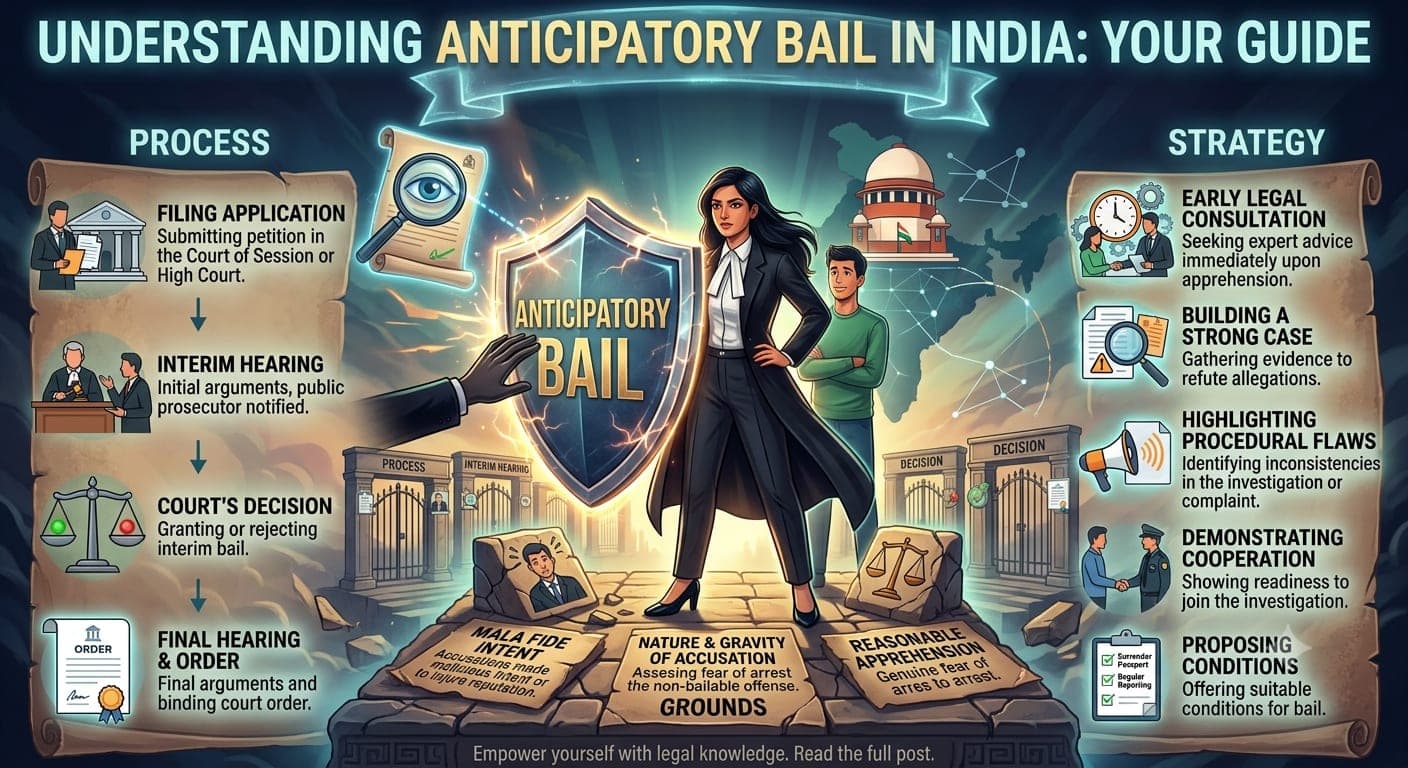
Anticipatory Bail in India: Process, Grounds, and Strategy
Under Section 482 BNSS you can seek anticipatory bail before arrest. The grounds you plead and the court you choose shape the outcome.

7 Alimony Myths That Could Cost You Dearly in an Indian Divorce
Alimony and maintenance in India are governed by fact-specific rules. We debunk seven myths that can cost you money or rights in divorce.
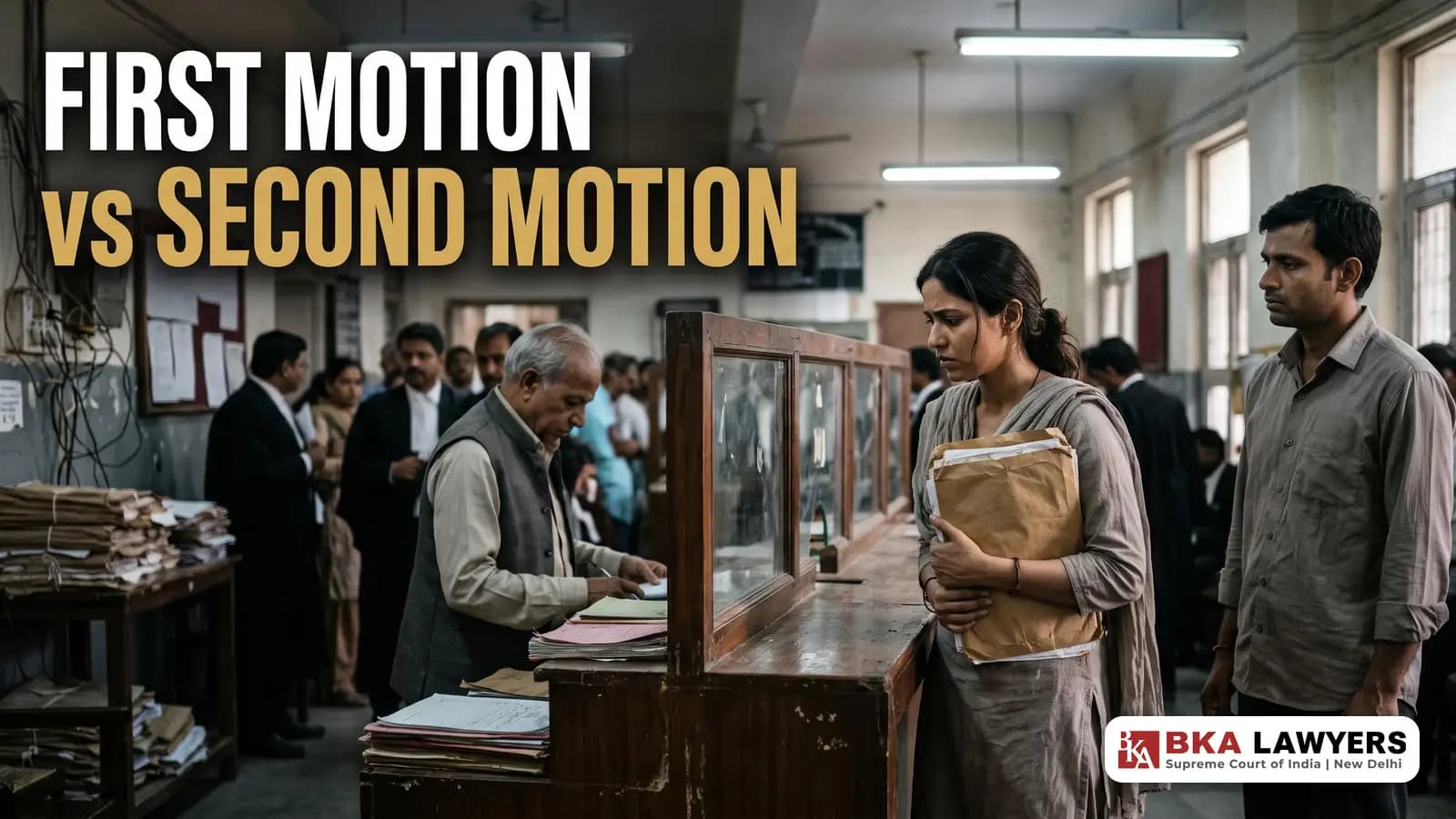
First Motion vs Second Motion in Mutual Divorce: What Actually Changes Between the Two Hearings
A clear comparison of the first motion and second motion in a mutual consent divorce under Section 13B of the Hindu Marriage Act, explaining what the court records at each stage, the cooling-off period, what happens if one spouse withdraws consent, and the documents to keep ready.
Bail Matters Representation Across Delhi NCR
Our advocates handle bail matters matters before the Supreme Court of India, High Court of Delhi, High Court of Punjab & Haryana, Chandigarh, Rajasthan High Court (Jaipur & Jodhpur), All District & Sessions Courts, Delhi — Tis Hazari, Rohini, Karkardooma, Saket, Dwarka, Patiala House & Rouse Avenue, District Courts across NCR — Gurugram, Noida, Ghaziabad, Faridabad, NCLT & NCLAT, New Delhi, DRT & DRAT, New Delhi, RERA Authorities & Consumer Commissions, Delhi NCR, MACT, Labour Courts, CAT & SDM Courts, Delhi, with chambers at Tis Hazari Court, Rohini Court, Pitampura Office, Narela Office.
Tis Hazari Court
Chamber No. A-15, Western Wing, Tis Hazari Courts, New Delhi - 110054
Rohini Court
Chamber No. 1032 Lawyer's, Rohini Court Complex, Block D, Sector 14, Rohini, New Delhi, Delhi 110085
Pitampura Office
NP-39/C, Maurya Enclave, Pitampura, New Delhi - 110088
Narela Office
Pocket IV, Sector G2&G6, 1109, Eleventh Floor, Tower C, Narela, Delhi 110040
›Find a bail matters lawyer near you (12)
Related Practice Areas
Civil Law
Comprehensive civil litigation and dispute resolution across Delhi NCR courts.
Learn moreFamily Law
Compassionate, effective legal solutions to safeguard your family's interests.
Learn moreDivorce Matters
Skilled divorce lawyers protecting your rights through the complexities of marital dissolution.
Learn more