What Constitutes Medical Negligence
Medical negligence is a failure by a doctor or hospital to exercise the degree of care expected of an ordinarily competent practitioner in the same field. The patient must establish three elements: that a duty of care was owed, that the duty was breached, and that the breach caused injury or loss. A poor outcome alone does not prove negligence; the standard is that of a reasonably competent professional, not the highest possible standard.
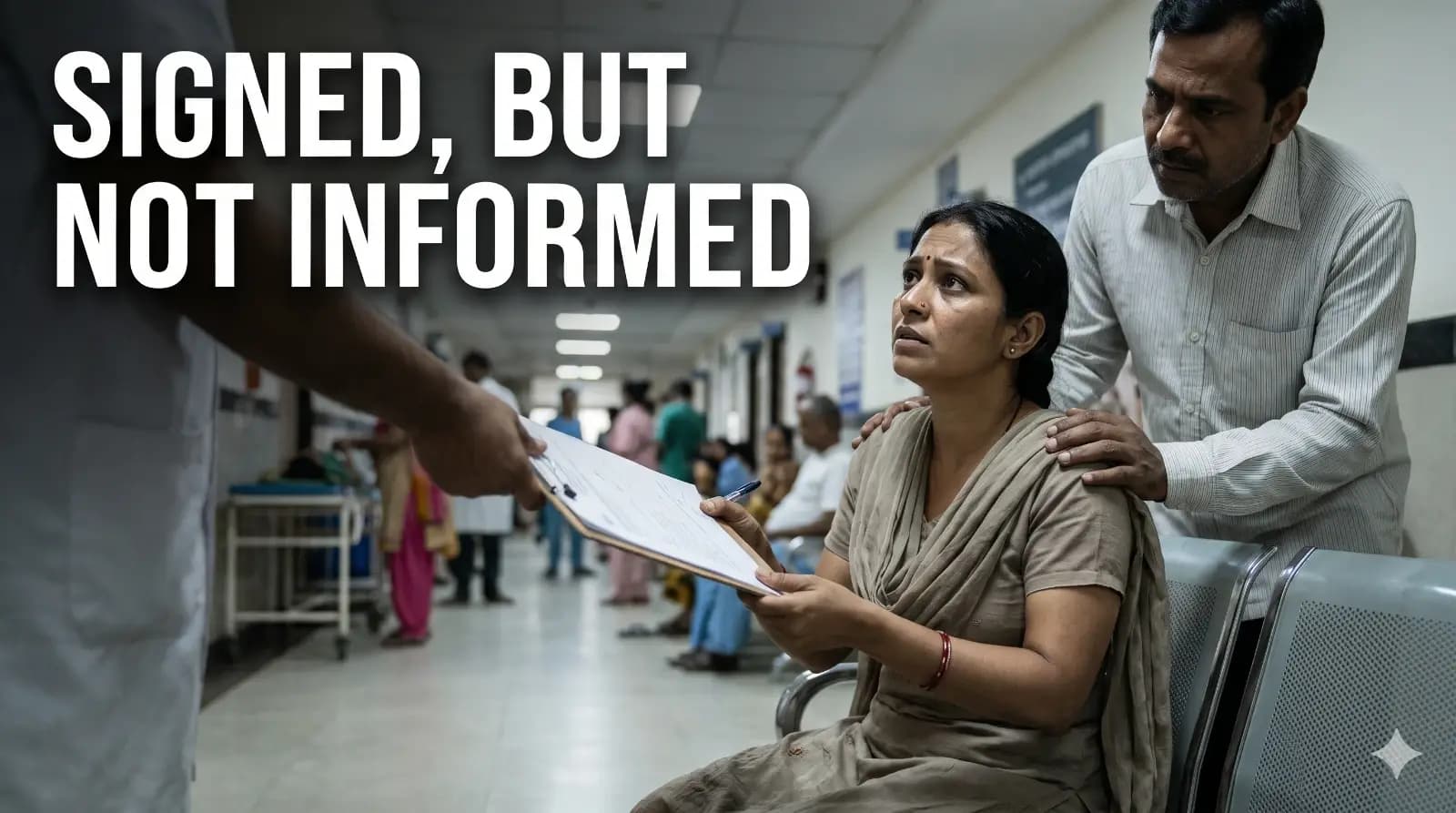
Actionable claims include surgical errors, misdiagnosis and delayed diagnosis, birth injuries and maternal negligence, wrong medication, failure to obtain informed consent and negligent post-operative care. Complaints may be framed as civil claims for compensation, as complaints before a Consumer Commission where the service was paid for, or as criminal complaints in rare cases of gross negligence.
Forums for Medical Negligence Claims
A patient may seek compensation before a Consumer Commission under the Consumer Protection Act, 2019, where medical treatment is a service and consideration was paid. The District Commission, State Commission and National Commission hear matters according to the value of the claim. A civil suit for damages may be filed before the competent civil court. Where gross negligence is alleged, a criminal complaint may be made, though courts have repeatedly held that a mere error of judgment is not a criminal offence.
A complaint of professional misconduct may also be made to the State Medical Council, which can take disciplinary action against the practitioner. BKA Lawyers advises on the appropriate forum and appears before the Consumer Commissions, civil courts and criminal courts.
Medical Records and Expert Evidence
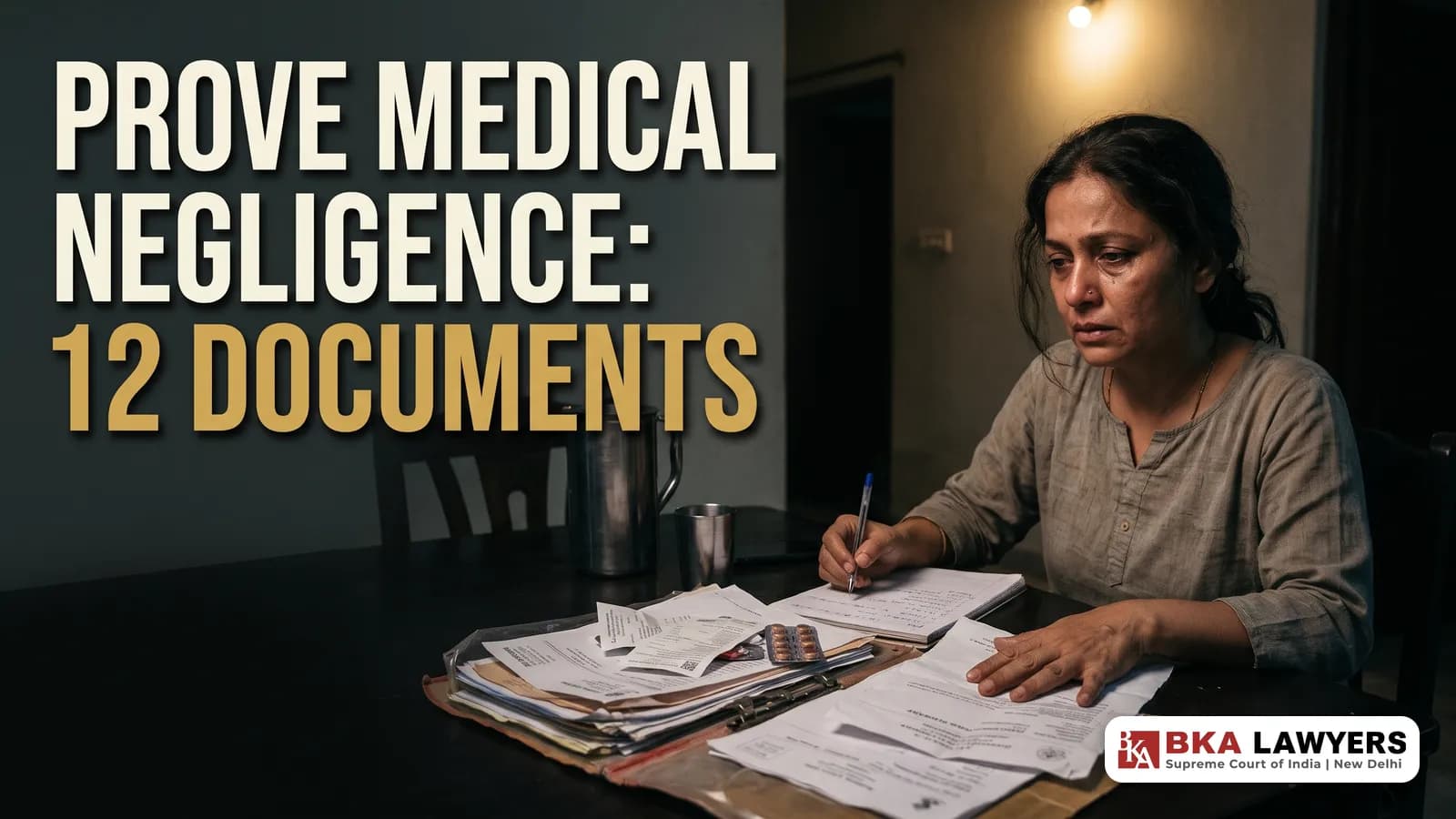
Medical records form the foundation of any claim. The patient or family should obtain complete copies of the case sheet, discharge summary, investigation reports, operation notes, consent forms and prescriptions. Under the Clinical Establishments (Central Government) Rules, 2012 and the directions of the Supreme Court, hospitals are expected to maintain and furnish records. In a consumer complaint, the hospital is ordinarily required to produce the records it holds.
Expert opinion is usually essential to establish the standard of care and causation. The opinion may be obtained from a qualified practitioner in the relevant specialty. Courts and Consumer Commissions also rely on medical literature and, where necessary, on an expert appointed by the forum. BKA Lawyers assists in collecting records and in identifying the appropriate expert discipline.
Time Limits
A consumer complaint must be filed within two years from the date of the cause of action under Section 69 of the Consumer Protection Act, 2019, though a Commission may condone delay on sufficient cause. A civil suit for compensation is governed by the Limitation Act, 1963. A criminal complaint is subject to the limitation prescribed in the BNSS (Bharatiya Nagarik Suraksha Sanhita, 2023).
Where negligence is discovered later, the cause of action may arise on the date of discovery, but this depends on the facts. Delay can defeat a meritorious claim, so legal advice should be sought promptly.
How Compensation Is Assessed
Compensation is intended to place the claimant, so far as money can, in the position they would have occupied but for the negligence. Heads of compensation include medical expenses already incurred and likely in future, loss of income, pain and suffering, loss of amenity, and, in fatal cases, loss of dependency and funeral expenses. Consumer Commissions also consider compensation for mental agony and litigation costs.
The assessment depends on documentary proof of expenses, income and dependency. There is no fixed formula or calculator; each case is assessed on its evidence. The firm prepares a detailed statement of loss and supports it with records.
Why Choose BKA Lawyers
BKA Lawyers has over 35 years of experience in civil, criminal and consumer litigation. The firm appears before the Supreme Court of India, the High Court of Delhi, the High Court of Punjab & Haryana at Chandigarh and the Rajasthan High Court at Jaipur and Jodhpur, as well as the District & Sessions Courts across Delhi and the District Courts across NCR, including Ghaziabad, Gurugram, Noida and Faridabad. It also appears before the Consumer Commissions in Delhi NCR.
The firm maintains offices at Tis Hazari Court (Chamber No. A-15, Western Wing, Tis Hazari Courts, New Delhi - 110054), Rohini Court (Chamber No. 1032 Lawyer's, Rohini Court Complex, Block D, Sector 14, Rohini, New Delhi, Delhi 110085), Pitampura (NP-39/C, Maurya Enclave, Pitampura, New Delhi - 110088) and Narela (Pocket IV, Sector G2&G6, 1109, Eleventh Floor, Tower C, Narela, Delhi 110040). Urgent bail and arrest assistance is available 24x7.