What Constitutes Medical Negligence
Medical negligence is a failure by a doctor or hospital to exercise the degree of care expected of a reasonably competent practitioner in the same field. Indian courts apply the standard laid down in Jacob Mathew v. State of Punjab: a professional is not liable merely because treatment failed, but only where there is a breach of the accepted standard of care and that breach caused harm.
A claim generally requires three elements: a duty of care owed to the patient, a breach of that duty, and injury or loss flowing from the breach. Common grounds include misdiagnosis or delayed diagnosis, failure to order necessary investigations, surgical errors, wrong medication, inadequate post-operative care, and neglect during labour and delivery resulting in birth injury.
The distinction between an error of judgment and negligence is decisive. A doctor who chooses one accepted line of treatment over another is not negligent merely because the outcome was poor. The firm examines the medical record before advising whether a compensable claim exists.
Forums for Medical Negligence Claims
A patient may proceed in more than one forum, depending on the nature of the grievance and the relief sought.
A complaint may be filed before the District, State or National Consumer Commission under the Consumer Protection Act, 2019, since medical treatment is treated as a service. Pecuniary limits govern which commission hears the matter, and complaints may be brought by the patient or by legal heirs in a case of death.
A civil suit for damages may be filed before the competent civil court, where compensation for negligence is claimed. A criminal complaint may be made where the conduct discloses rashness or negligence of a grave nature; the Supreme Court has held that criminal prosecution is not appropriate for every case of medical error.
A complaint of professional misconduct may also be made to the State Medical Council, which can act against the registration of the practitioner. BKA Lawyers appears before the High Court of Delhi, the Supreme Court of India, the District and Sessions Courts across Delhi and the Consumer Commissions and other tribunals in Delhi NCR.
Medical Records and Expert Evidence
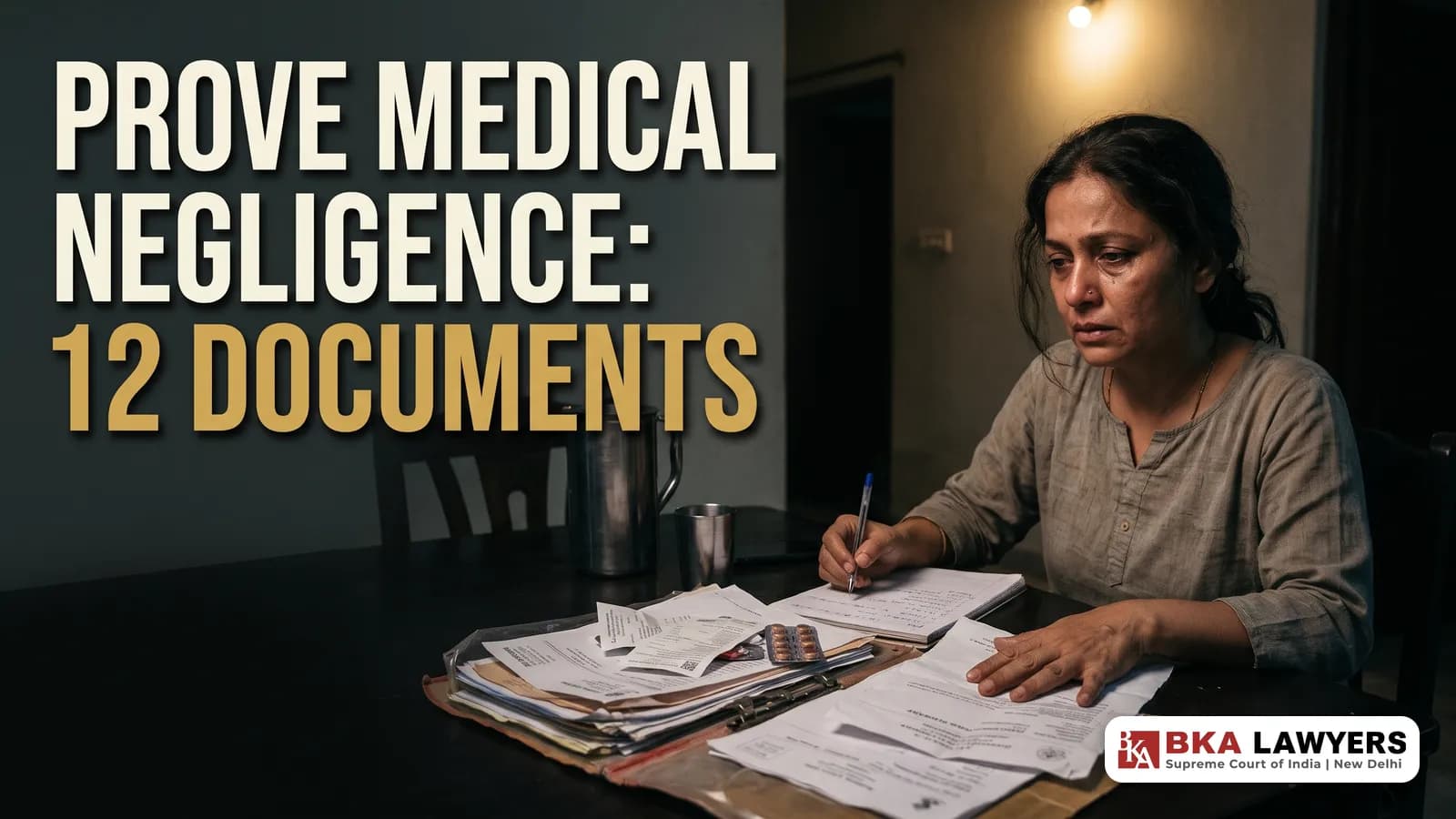
A negligence claim is built on documents. The firm seeks the complete treatment record: admission notes, case sheets, investigation reports, imaging, operation notes, discharge summary, prescriptions, referral notes and the death summary where applicable. Under the Clinical Establishments framework and the directions of the Supreme Court, hospitals are expected to maintain and produce these records.
Expert opinion ordinarily carries the case. A medical board or an independent expert in the relevant speciality is asked to comment on the standard of care and on causation. The firm coordinates the collection of records, obtains the opinion and prepares a chronology that links the alleged breach to the injury suffered.
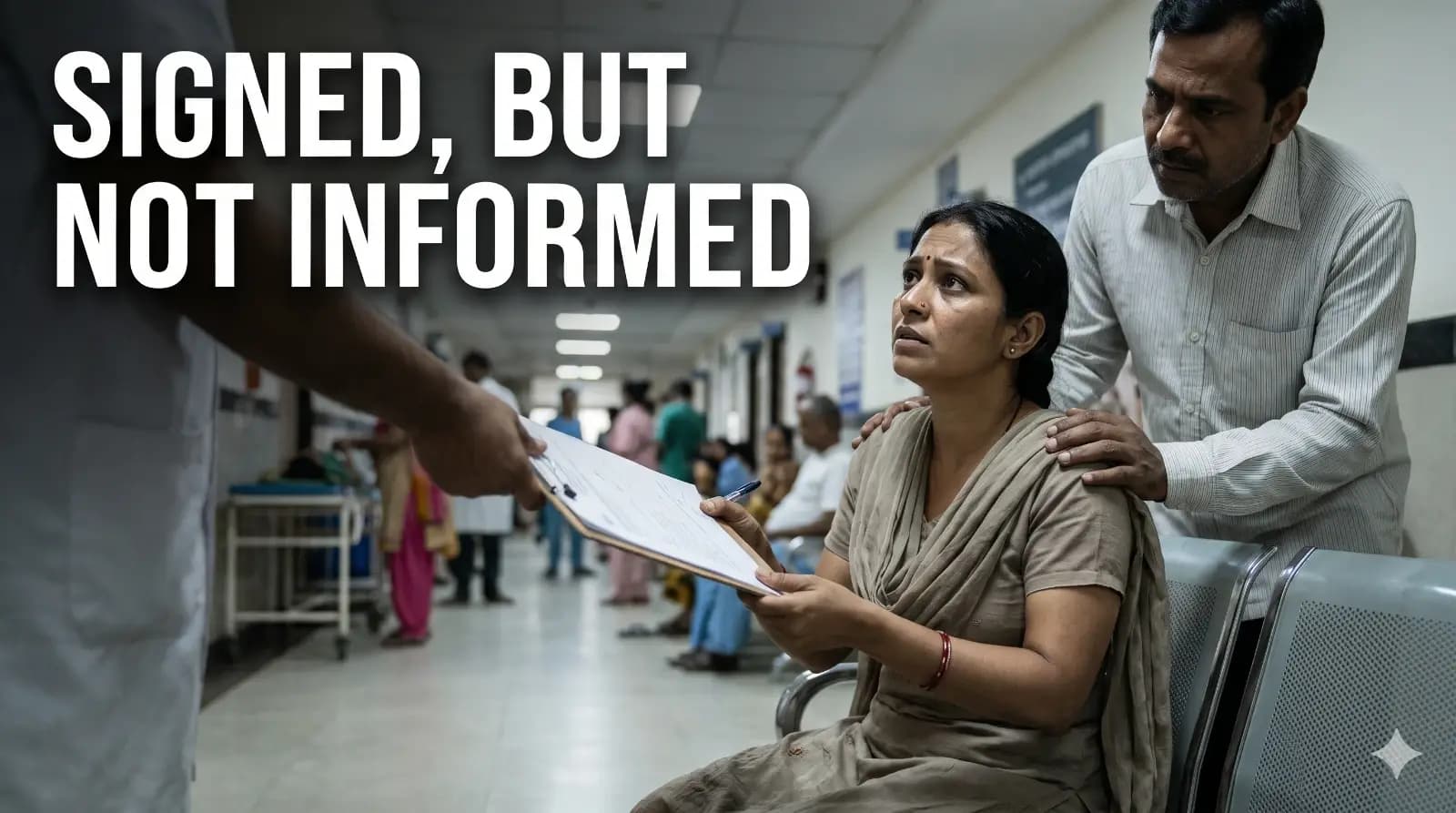
Informed consent is also examined. Where a procedure carried known risks that were not disclosed, or was performed without valid consent, that may found a claim independent of the technical competence of the treatment.
Time Limits
A consumer complaint must be filed within two years from the date on which the cause of action arises, that is, from the date of the negligent act or from the date the patient had knowledge of it. Delay may be condoned on sufficient cause being shown, but reliance on condonation is unwise.
A civil suit for compensation is governed by the Limitation Act, 1963, and must ordinarily be brought within the prescribed period from the date of the act or of knowledge. Criminal complaints are subject to the limitation applicable to the offence alleged.
Where a patient is a minor, or where the injury manifests only later, the starting point of limitation requires careful assessment. Families are advised to preserve records and seek advice early, since evidence becomes harder to secure with time.
How Compensation Is Assessed
Compensation is intended to place the claimant, so far as money can, in the position that would have obtained but for the negligence. It is not punitive in nature.
Awards ordinarily cover medical expenses already incurred and likely in future, loss of earning capacity and future income, pain and suffering, and the cost of care and attendant support. In fatal cases, the loss of dependency of the family is computed, along with funeral expenses and loss of consortium, following the principles applied in motor accident and negligence cases. In birth injury claims, the lifelong cost of treatment, special education and care is a material head of loss.
The assessment is evidence-led; there is no statutory formula or calculator for medical negligence. Because awards are decided case by case, the firm does not predict outcomes, but prepares the material on which the commission or court will assess the claim.
Why Choose BKA Lawyers
BKA Lawyers has over 35 years in practice and handles medical negligence claims for patients and families across Delhi NCR. The firm maintains chambers at Tis Hazari Court and Rohini Court, with offices at Pitampura and Narela, and appears across the District and Sessions Courts of Delhi and the District Courts of Gurugram, Noida, Ghaziabad and Faridabad.
Matters are taken from any area to any court. Instructions are recorded from the family, records are collected and reviewed, expert opinion is arranged, and the complaint or suit is drafted and pursued. Where professional misconduct is alleged, a parallel complaint before the State Medical Council is considered. Urgent bail and arrest assistance is available 24x7 where a criminal complaint arises.
The firm does not guarantee results. Its role is to assess the claim candidly, present the evidence properly and pursue the matter to a reasoned decision.